

Austin’s Black community did not arrive by accident, and its displacement did not happen by coincidence. To understand the present landscape of Black-owned businesses, grassroots organizations, and ongoing inequities, we have to start with policy.
A City by Design: The 1928 Plan and the Making of East Austin
In 1928, Austin adopted its first comprehensive city plan. Often referred to as the 1928 Master Plan, it deliberately designated East Austin as the “Negro district,” effectively concentrating Black residents, along with Mexican American families, into one side of the city. City services, schools, and public infrastructure were relocated to that area, making it nearly impossible for Black residents to live elsewhere without losing access to essential resources.
This was not informal segregation. It was municipal design.
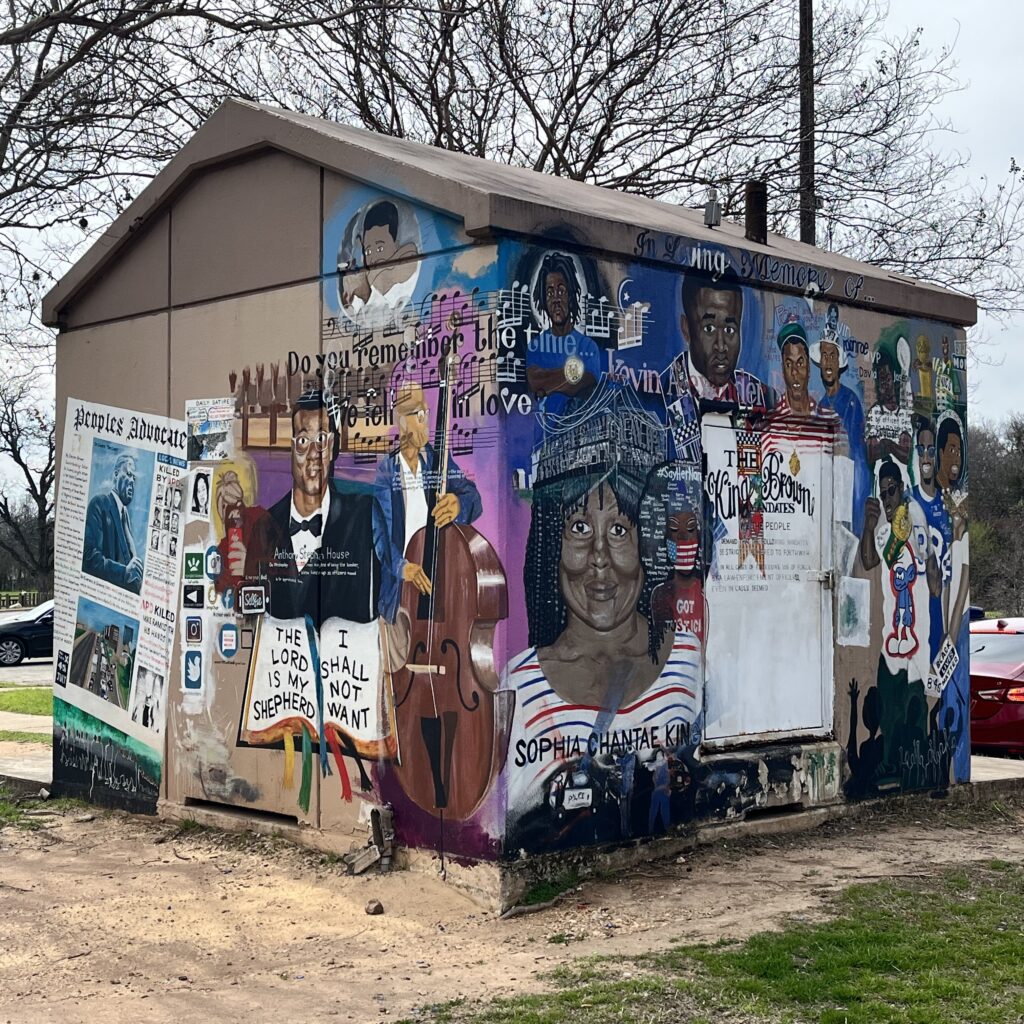
The result was the forced consolidation of Black life east of East Avenue (now I-35). Out of restriction came resilience. Churches, schools, businesses, and cultural institutions flourished within those boundaries. What was meant to confine instead cultivated a deeply rooted community ecosystem.
That foundation gave rise to legacy institutions like Huston-Tillotson University and longstanding Black-owned establishments that became anchors of economic and social life.
Ownership as Survival: Black Business in a Segregated City
Because access elsewhere was restricted, Black Austinites built their own. East Austin became home to restaurants, barber shops, music venues, insurance agencies, and newspapers that circulated both information and pride.
Media platforms like The Villager documented community milestones when mainstream outlets would not. KAZI 88.7 FM amplified Black voices across the airwaves, shaping local culture and political awareness, and soulciti gave Black-owned businesses a place to share their establishments with their peers.
In 1982, the Greater Austin Black Chamber of Commerce was founded to formalize economic advocacy, recognizing that entrepreneurship required structural support, not just hustle.
Black ownership in Austin has never been only about commerce. It has been about stability, safety, and self-determination in a city that often expanded without equitable inclusion.
The Shift: Gentrification and the Erosion of a Cultural Core
The late 1990s and early 2000s ushered in Austin’s tech boom. With rapid population growth came redevelopment. Property values in East Austin skyrocketed. Longtime homeowners faced rising taxes. Renters were displaced. Legacy businesses closed.
The very neighborhoods created through segregation became desirable real estate.
Organizations like SIX SQUARE emerged to protect what remained, formally establishing Austin’s Black Cultural District to preserve history, promote arts, and advocate for equitable development. Preservation became activism.
Gentrification in Austin is not abstract. Census data over the past two decades shows a significant decline in the Black population within the city limits, even as the metro area grows. The question is no longer whether displacement occurred. It is how to prevent cultural erasure moving forward.
2020 and Beyond: A New Era of Collective Action
The racial justice uprisings of 2020 reignited local organizing in Austin. Conversations about policing, public safety, health inequities, and economic gaps gained renewed urgency.
In response to historic underfunding and even defunding of Black-led nonprofits, the The Black Fund was launched through the Austin Community Foundation to invest directly in Black-serving organizations. The initiative acknowledged what community leaders had long stated: Black institutions were expected to solve systemic problems without systemic resources.
Meanwhile, 100 Black Men of Austin continued mentorship and leadership programming, investing in youth pipelines amid shifting demographics. The difference in this moment is visibility. Black Austinites are not only building. They are documenting, archiving, and asserting narrative control.
Even socially, organizations like Where Y’all at Though, _OFCOLOR, We Outside ATX, Water Your Plants, and many more, have emerged to create opportunities for the Black community, Austin minorities, etc., to gather and celebrate our culture as well as each other.
The Present Tension: Thriving, Yet Under Pressure
Today, Austin’s Black community exists in tension.
There is growth in Black entrepreneurship, increased consumer awareness around supporting Black-owned businesses, and stronger networking infrastructures. Creative collectives, curated markets, and digital platforms make the Black Austin community visible in new ways.
And yet:
-
Black homeownership within city limits continues to decline.
-
Access to capital remains uneven.
-
Cultural institutions face ongoing funding instability.
-
Development often moves faster than preservation policy.
The story is not decline. It is adaptation under constraint.
The Work Ahead: Intentional Inclusion or Continued Erasure?
For a city that markets itself as progressive, Austin’s challenge is alignment. Growth without equity reproduces old patterns in new packaging.
The Culture Edits understands that culture is not aesthetic. It’s infrastructure. It’s land, funding, policy, ownership, and narrative.
Black Austinites have survived segregation, redlining, urban renewal, and tech-driven displacement. What remains is powerful: institutions, entrepreneurs, artists, organizers, elders, and youth who continue to build.
The future of the Black community in Austin will depend on whether preservation is prioritized as policy, not sentiment, and whether investment matches rhetoric.
Because this community was built by design.
And it deserves to remain by intention.
Leave a Reply